Solar made simple

How solar works, in plain English.

What actually happens on your roof, the three ways you can set up a system, and every step between saying yes and switching on. Written for homes across Nelson and Tasman, by the people who'll be up on yours.

Compare the three setups Quote to switch-on
01 · Roof to grid

Three things happen, all day, without you lifting a finger.

Panels catch the sun, an inverter turns it into house power, and anything you don't use goes back out the meter as credit.

01

Panels catch the sun

Solar panels on your roof turn daylight, not just direct sun, into DC electricity. Nelson and Tasman get more of it than almost anywhere else in the country.

02

The inverter makes it usable

A single conversion turns that DC into the 230V AC your fridge, heat pump and hot water cylinder already run on. It happens silently, all day.

03

The meter runs both ways

Your house takes what it needs first. Anything left over exports to the grid and comes back as credit on your bill. Nothing is wasted.

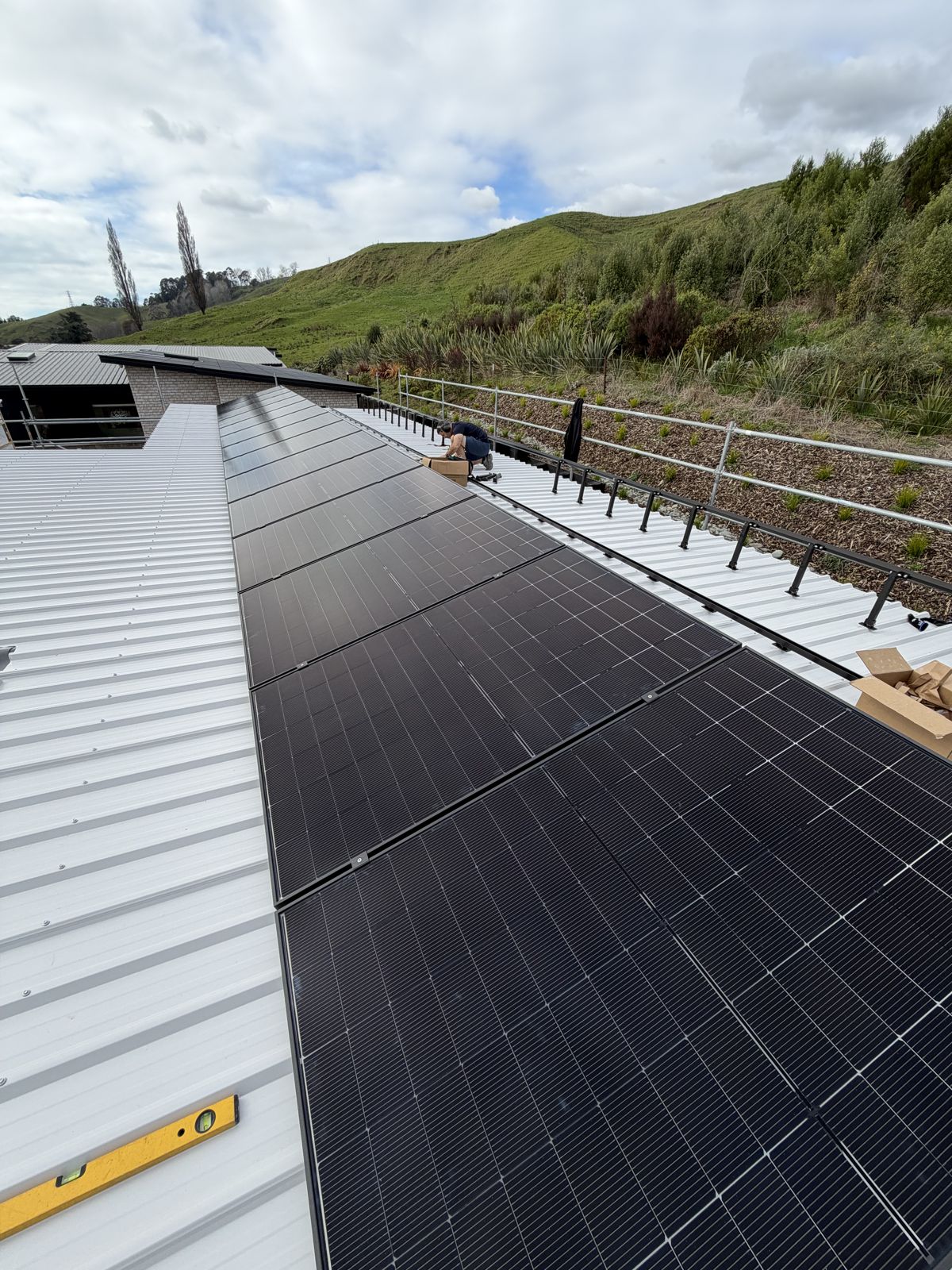
A Tasman Solar installer fitting a long run of black solar panels on a white corrugated roof, with green hills behind
Install day: panels going onto a new build
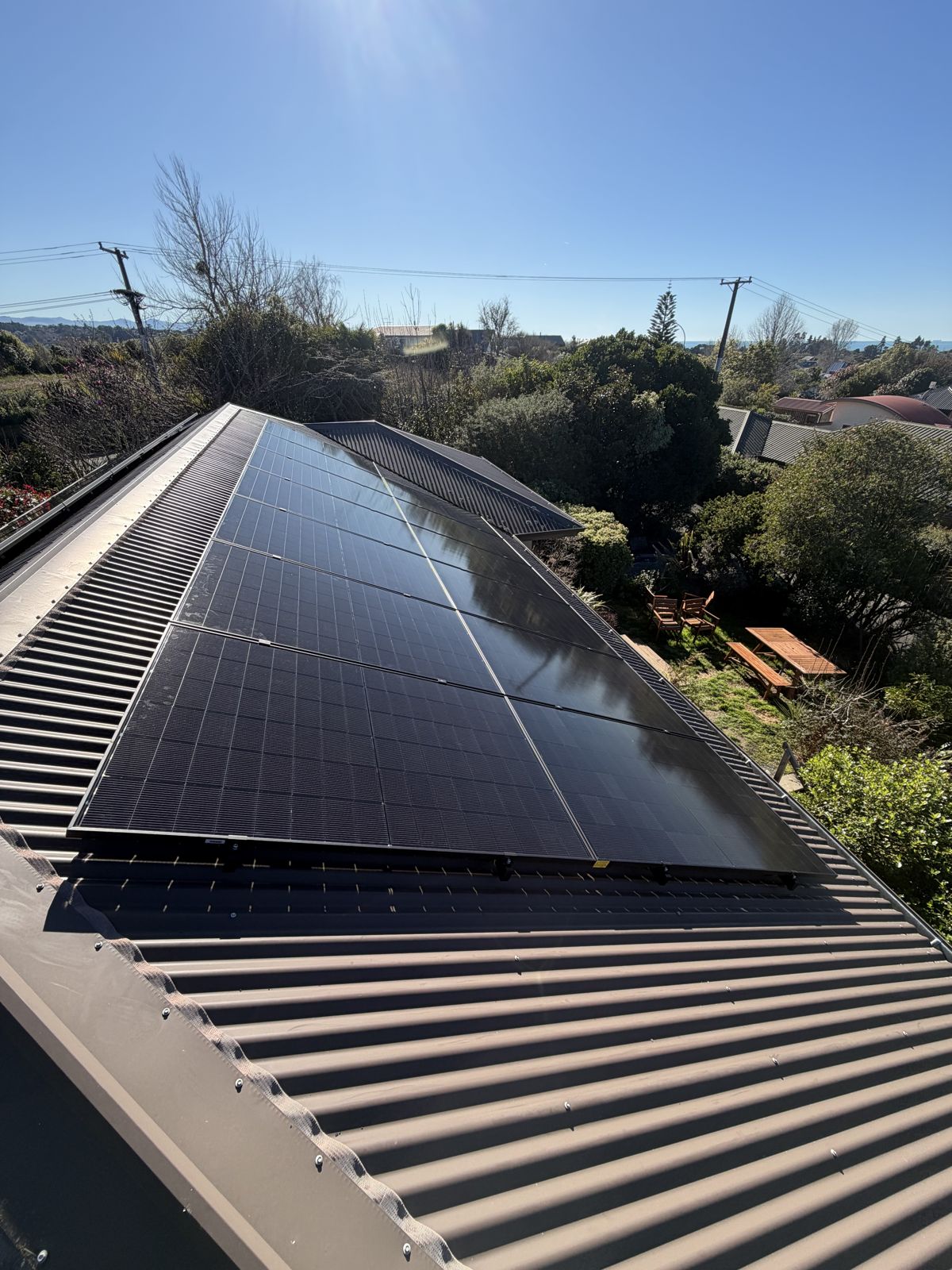
All-black solar panels on a brown corrugated iron roof above a garden, with the sea in the distance
All-black panels on a corrugated iron roof
02 · What we install

Three ways to set up your system.

There's more than one way to put a solar system together, and it isn't the industry making things complicated. It comes down to what you want your solar to do and what you want to spend. All three setups below use the same Sigenergy gear, so you aren't comparing quality. You're choosing how independent from the grid you want to be, and each one builds on the last.

The foundation

Hybrid inverter only

The Sigenergy hybrid inverter turns the DC power your panels make into AC power your home can use, in real time, while the sun is up. Anything you don't use goes to the grid, usually for a credit.

With no battery, once the sun goes down you're back on the grid as normal. And if the power goes out, so does everything else. For safety reasons, solar alone can't run without the grid there.

Best suited to

Households who mostly use power during the day, are working to a tighter budget, and want to start cutting bills now with the option to add a battery later.

Where the savings jump

Hybrid inverter with battery storage

The same inverter, plus Sigenergy's stackable SigenStor battery modules. Rather than sending spare solar to the grid for a small credit, you store it at home for the evening, when the oven's on and the sun is long gone.

Most households see the biggest jump in savings here, because you use far more of your own power instead of buying it back at retail rates. Being upfront: without the Gateway, this won't keep the house running in a power cut.

Best suited to

Households wanting to maximise savings and use as much of their own solar as possible, but who aren't especially worried about outages.

The full setup, with backup

Hybrid inverter, battery and Gateway

We add the Sigenergy Energy Gateway to the inverter and battery. It lets your system safely disconnect from the grid the moment the power goes out and switch the house over to battery and solar, fast enough that most people never notice.

Depending on the setup, you can back up the whole home or just the essentials like the fridge, lights and internet, so the battery lasts further through a long outage.

Best suited to

Households who want the savings of setup two, plus real backup power when the grid goes down.

Side by side
Comparison of the three Tasman Solar system setups
What you get 01Hybrid inverter only 02+ Battery 03+ Battery + Gateway
Runs appliances from solar during the dayYesYesYes
Stores solar to use at nightNoYesYes
Reduces grid relianceSomeA lotA lot
Keeps the power on during an outageNoNoYes
Upfront investmentLowestMiddleHighest

This is general information. Actual system sizing, battery capacity and backup coverage depend on your home's power use and roof, and are confirmed during your site assessment.
03 · From quote to switch-on

The panels go up in a day or two.
We handle the weeks either side.

Most of the wait is on external paperwork: the lines company, the inspector and your power retailer. We lodge every application and chase every one of them, so the only date you need to keep free is install day.

  1. 01

    Quote accepted

    Day 0
    You say yes

    We've been up on the roof, looked at your usage and sent a written quote. You confirm and we start the paperwork the same week.

  2. 02

    DG approval

    1–4 weeks
    Lines company

    The Distributed Generation application goes to Network Tasman or Nelson Electricity. They confirm your street can take the export. We lodge it and follow it up.

  3. 03

    Install day

    1–2 days
    Panels go up

    Rail and flashings, panels, inverter and switchboard work. One day on most homes, two if there's a battery or a tricky roof.

  4. 04

    Electrical inspection

    2–4 weeks
    From installation

    An independent inspector signs off the installation as safe and compliant. The certificate goes on file for you and for the retailer.

  5. 05

    Meter swap

    3–4 weeks
    From installation

    Your retailer swaps in a meter that reads both directions, so your export is measured and credited. This is usually the longest wait.

  6. 06

    Switch on

    You're live
    Savings start

    We commission the system, set monitoring up on your phone and walk you through it. Most people see it on the next bill.

04 · Good questions

The ones we get asked most.

Do I need a battery?

Not always. If your household uses most of its power in daylight, a well-sized array without storage often pays back faster. If you're out all day, or you want backup through an outage, a battery starts to make sense. We'll show you both sets of numbers rather than pushing one.

Can I add a battery later?

Yes. All three setups use the same Sigenergy gear and each one builds on the last, so you can start with the hybrid inverter and add SigenStor battery modules, and later the Energy Gateway, when you're ready.

Will solar keep my power on in a power cut?

Only with the Energy Gateway. For safety reasons, solar can't run without the grid there, so an inverter on its own, or an inverter with a battery, switches off when the power goes out. The Gateway lets the system safely disconnect from the grid and run the house on battery and solar.

How long does it take from quote to switch-on?

The panels go up in one to two days. Most of the wait is approvals either side: DG approval from your lines company usually takes one to four weeks, then the electrical inspection and meter swap follow over the next few weeks. We lodge and follow up all of it.

More questions? See the full FAQs, or read about energy loans for solar.